
blog & articles


How to Choose a CDP for E-Commerce: 8 Key Factors for Retailers in Latin America
The 8 criteria for evaluating a CDP in retail and e-commerce in Latin America, along with the questions you should ask each provider.
Summary: When choosing a CDP for e-commerce, evaluate eight factors: unification of online and offline data, identity resolution, real-time segmentation and activation, automation, predictive analytics, sales attribution, integration with customer service, and a pricing model that accounts for seasonality. The best CDP isn’t the one that stores the most data, but the one that turns that data into measurable sales.
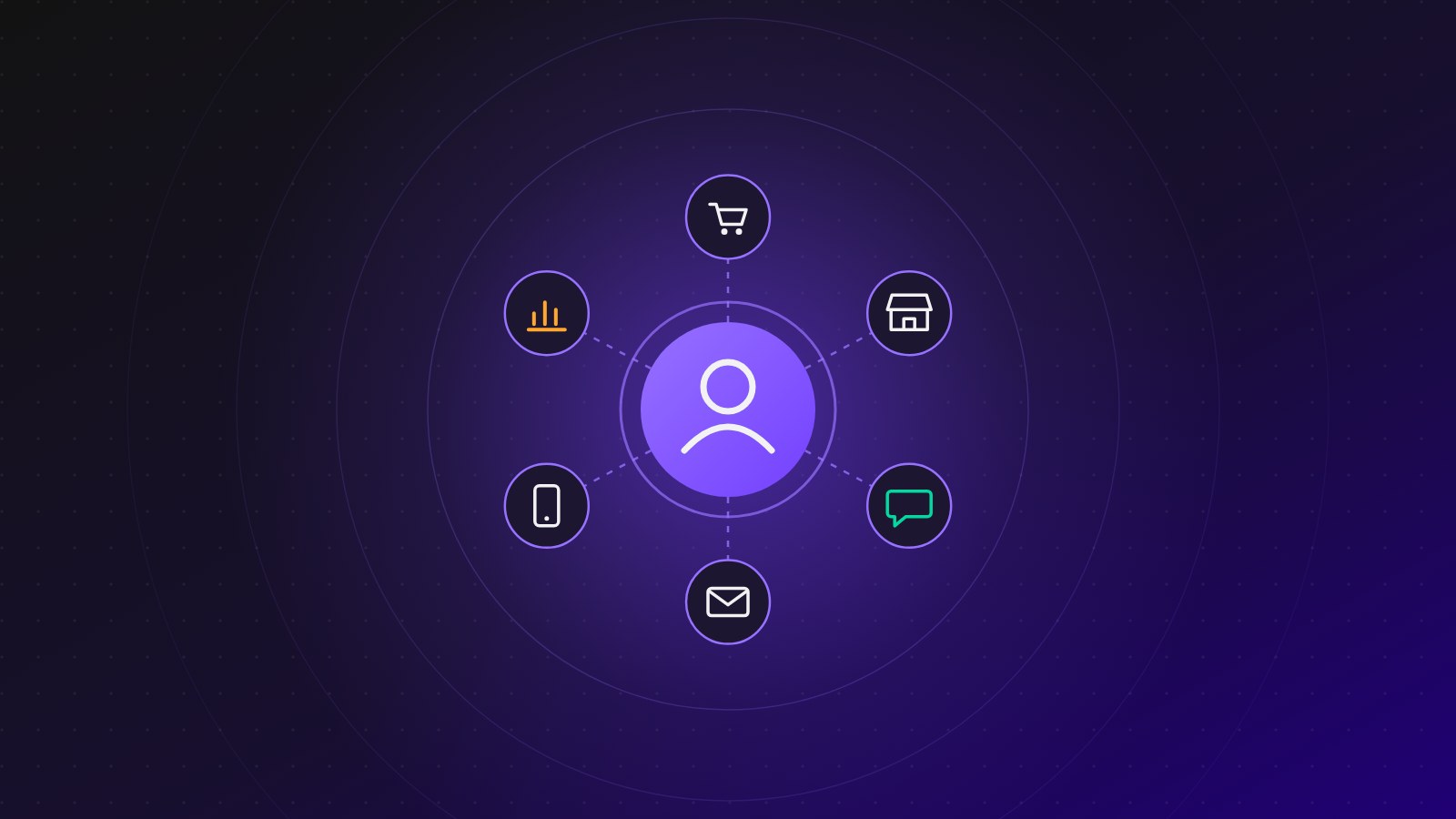
Your customer shops at the physical store, browses the app, abandons a shopping cart on the website, and messages you on WhatsApp to ask about an exchange. If that data is stored separately in the shopping cart, the CRM, social media, and the point of sale, you see four different people when there’s really only one.
That’s what happens to many retailers in Latin America: they plan campaigns based on an incomplete understanding of their customers. A customer data platform (CDP) solves that problem, but not all CDPs do so in the same way. In this guide, we walk you through the eight criteria for evaluating a CDP before signing a contract, along with specific questions you should ask each provider.
Key Considerations for Choosing a CDP for E-commerce
- Consolidating data from brick-and-mortar and online stores is the foundation of any repeat-purchase strategy.
- Identity resolution determines whether you can personalize your messages or whether you continue to send the same message to your entire audience.
- An actionable CDP segments and triggers campaigns on WhatsApp, email, and ads without exporting files.
- Attribution with a control group is the only way to know how much each campaign actually sells.
- If purchase data is also shared with customer service, every inquiry could lead to a new sale.
- The pricing model needs to support the peaks on Cyber Monday, Black Friday, and Christmas—not penalize them.
What is a CDP for e-commerce?
An eCommerce CDP is a platform that aggregates each customer’s purchase and behavioral data from all channels into a single, up-to-date profile. With that profile, you can segment customers, personalize campaigns, and track sales without relying on manual data exports.
The category is growing rapidly. According to Fortune Business Insights, the global CDP market was valued at $3.28 billion in 2025 and is projected to reach $17.03 billion by 2034, with a compound annual growth rate of 19.6%. More choices mean more options—but also a greater risk of making the wrong choice.
At Data4Sales, the CDP is the foundation of the Data pillar: it connects VTEX, Shopify, Fenicio, your POS, and other sources, and delivers those profiles to the Marketing and Support teams.
8 Factors to Consider When Evaluating a CDP for E-commerce
1. Does it consolidate online and offline data?
A good CDP connects the physical store, e-commerce, the app, and communication channels into a single profile. Without that, each channel works with its own version of the same customer.
For retail in Latin America, this includes the POS and channels such as WhatsApp and email—not just the website.
What to ask the provider: Does it have native connectors for my e-commerce platform and my point-of-sale system? How often does it sync?
2. Does it verify each customer's identity?
Identity resolution combines all records for a single person into a single profile. Without it, someone who makes purchases through three different channels appears as three separate customers.
There are two approaches: the deterministic approach matches exact identifiers, such as email addresses, phone numbers, or ID numbers; the probabilistic approach uses algorithms to link anonymous sessions to known buyers. Ideally, both should be combined.
What to ask the vendor: What identifiers does it use to link profiles? How does it resolve duplicates in a database with dirty data?
3. Does it allow for real-time segmentation and activation?
Collecting data without acting on it is like accumulating information that goes to waste. An actionable CDP creates segments based on recency, frequency, value, and products purchased, and sends them directly to your channels.
With Data4Sales' smart audiences, you can cross-reference location, gender, purchase frequency, and categories, and target that audience via email, WhatsApp, Meta, and Google without exporting files. If you'd rather describe it in natural language, Orbis Audiences will build it for you.
What to ask the vendor: Do the segments update automatically when customer behavior changes?
4. Does it automate and customize campaigns?
Automation turns data into action. Workflows respond to an abandoned shopping cart, a special occasion, or a change in purchasing patterns—without anyone having to schedule each email.
Personalization goes beyond just including the customer’s name in the subject line: it means sending each customer the product and offer they need, through their preferred channel. Sending the same email to your entire customer base is like shouting in a public square: someone will hear you, but it won’t always be the person you need to reach.
What to ask the provider: Can I set up multichannel workflows (email + WhatsApp) using the same tool?
5. Does it include predictive analytics?
A modern CDP anticipates what will happen: who is likely to make another purchase, who is about to leave, and how much each segment will be worth in the future.
Data4Sales uses artificial intelligence to calculate a customer's future value, predict transactions, and recommend the next step. Orbis Copilot lets you access that data by asking simple questions, without having to create reports manually.
What to ask the provider: Are the predictive models built-in, or do I need external tools?
6. Do you measure actual sales using attribution?
Open rates and clicks don't pay the bills. A robust CDP links each email campaign to the revenue it generated, using business metrics that show which channel and which segment drive the most sales.
The most reliable way to measure this is with a control group: compare those who were exposed to the campaign with those who weren't. That way, you can see the incremental revenue—not just the sales that would have happened anyway.
What to ask the provider: Do they measure incremental revenue using a control group? Do they include sales from the physical store?
7. Does it link data to customer service?
This is the factor that's most often overlooked. If your customer service team responds without knowing what the customer purchased, it misses the opportunity to resolve the issue quickly and make another sale.
With Orbis Support, Data4Sales responds via WhatsApp with each customer’s purchase history and forwards the inquiry to a representative when necessary. The same profile that powers your campaigns also powers your after-sales service.
What to ask the provider: Can customer service agents (human or AI) see the purchase history during the conversation?
8. Does it scale with predictable pricing?
E-commerce traffic is seasonal: Cyber Monday, Black Friday, and Christmas cause session numbers to skyrocket. A pricing model based on the number of tracked users can drive up costs right during the months with the highest sales.
A CDP that works for 10,000 customers should work just as well for 500,000 without renegotiating the contract.
What to ask the provider: How is the price calculated, and what happens during peak traffic times?
Checklist for Comparing CDP Providers
Use this list during every demo. If a vendor can't clearly answer a question, that's a red flag.
- Data consolidation: Connect e-commerce, POS, app, WhatsApp, and email. Warning: Only the website is integrated.
- Identity Resolution: Merging Profiles Using Deterministic and Probabilistic Rules. Alert: Duplicate Customers by Channel.
- Segmentation and activation: dynamic segments activated without exporting. Alert: Export a CSV file for each campaign.
- Automation: behavior-based multichannel workflows. Warning: manually scheduled mailings.
- Predictive analytics: future value, churn risk, and next action. Warning sign: historical reports only.
- Attribution: incremental revenue compared to a control group. Caution: measures only page views and clicks.
- Customer Service: Purchase history visible in every conversation. Red flag: Support is separate from the data.
- Price and scale: predictable costs during peak season. Red flag: price per tracked user.
How to Choose the CDP That Will Boost Your E-Commerce Business
Before talking to vendors, I defined three things: your priority use cases (for example, recovering abandoned carts or increasing repeat purchases), the data sources you need to connect, and the metrics you’ll use to measure success. With that clarity, choosing a CDP is a business decision, not a technology gamble.
The key is to prioritize the ability to leverage data, not just store it. Data4Sales connects your data, understands it, and leverages it in marketing and customer service, with Orbis serving as the AI that brings the three teams together and measures incremental revenue.
Want to see how it would work with your data? Talk to an expert or learn more about the Data pillar.
Frequently Asked Questions About CDP for E-commerce
What is a Customer Data Platform (CDP)?
A CDP aggregates data from multiple sources into a single profile for each customer. With that profile, you can segment audiences and launch personalized campaigns based on actual purchasing behavior.
What is the difference between a CDP and a CRM?
A CRM manages relationships with known customers, primarily based on interactions entered by the team. A CDP automatically consolidates anonymous and known data from all channels, making it ready for use in email campaigns, WhatsApp messages, and ads.
How does a CDP help improve customer retention in e-commerce?
A CDP identifies which stage of the customer lifecycle each customer is in and enables the implementation of reactivation or loyalty-building actions based on their behavior—for example, sending a WhatsApp message to someone who hasn't made a purchase in 90 days.
What role does artificial intelligence play in a CDP?
AI predicts who will make another purchase, recommends the next step, and builds audiences based on a natural-language description. At Data4Sales, the Orbis agents (Copilot, Audiences, Creative, and Support) do this work within the context of your business.
Does a CDP work for brick-and-mortar stores or just for e-commerce?
An omnichannel CDP connects brick-and-mortar stores, e-commerce, apps, and conversational channels. Data4Sales integrates the point of sale with the online channel so you can see each customer's complete journey.
How long does it take to implement a CDP?
It depends on how many data sources you have and whether the CDP offers native connectors for them. With native connectors for platforms like VTEX or Shopify, integration is much faster than with custom developments.
Is a CDP useful for customer service?
Yes, if the CDP shares the profile with the customer service channel. That way, whoever responds—whether a person or an AI agent—can see what the customer purchased and can resolve the issue or make recommendations based on that context.


